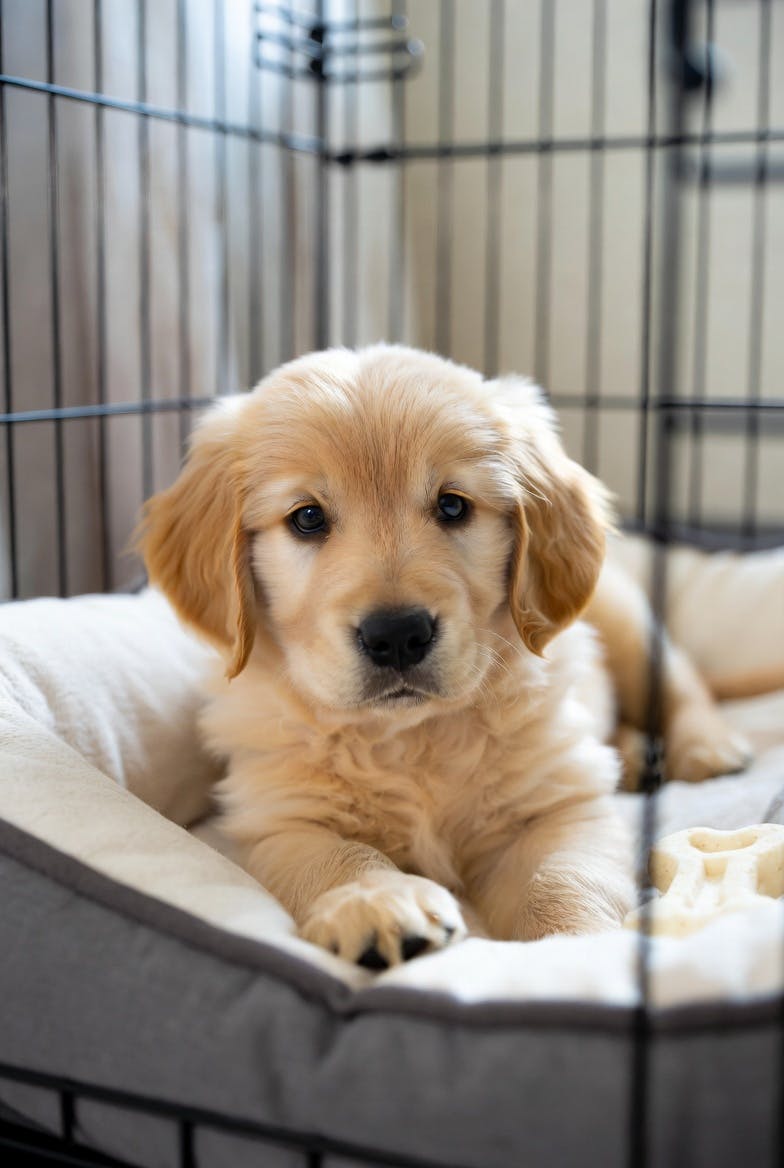
To crate train a dog effectively, use a 4-step positive reinforcement method: 1. Introduce the crate as a "treat zone" with the door open. 2. Feed regular meals inside the crate to build a positive association. 3. Gradually increase the time the door is closed while you are in the room. 4. Practice short departures. Never use the crate as a punishment, as this destroys the dog's sense of safety and increases anxiety.
Dogs are natural den animals. In the wild, a small, enclosed space meant safety from predators and a quiet place to sleep. Crate training leverages this instinct to help with housebreaking, travel safety, and anxiety reduction.
Place the crate in a central area like the living room. Prop the door open and toss in "high-value" treats (think boiled chicken or cheese). Let your dog explore the crate at their own pace without ever forcing them inside.
Once they are comfortable walking in, start feeding them their regular meals inside the crate. At first, keep the door open. Once they eat calmly, try closing the door just while they eat, then opening it the moment they finish.
Start asking your dog to enter the crate with a command like "Kennel" or "House." Give them a long-lasting treat (like a frozen peanut butter toy) and close the door for 5–10 minutes while you stay in the room. Gradually increase this time over several days.
Once they can stay for 30 minutes, start leaving the room for short periods. Don't make your departures or arrivals a big deal—keep it low-key to prevent excitement-based anxiety.
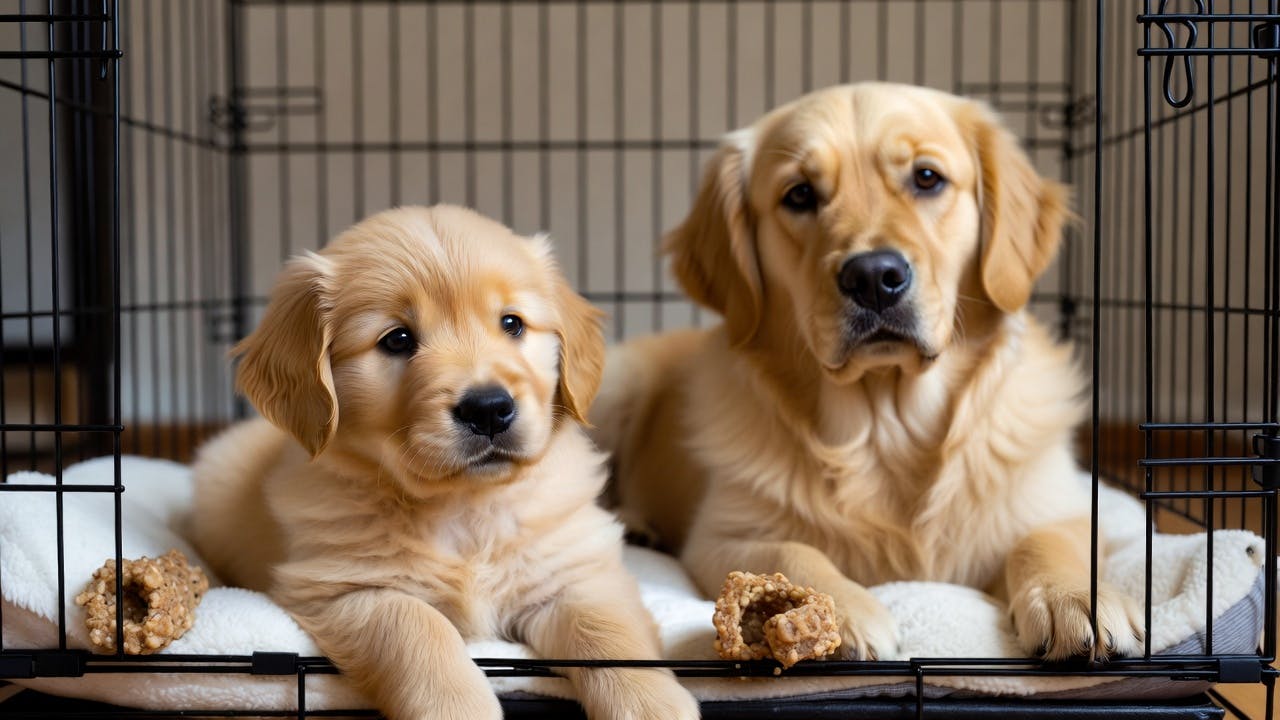
While the "den instinct" is the same, the approach changes with age.
If your dog panics (drooling, frantic digging, or howling) the second you leave, they may have Confinement Anxiety.
Never leave a collar or harness on your dog while they are in their crate. Tags and buckles can get snagged on the wire mesh, creating a high-risk strangulation hazard. Always "undress" your dog before they go in for a nap.


